
Ontoterminology · version 1.0
ALyrA: Archaic Lyric Agora
Archaic lyric poets, their poems and the vocabulary of the genre. ALyrA stands for “Archaic Lyrical Agora”.
The visualisations below present the dataset's places, composer relationships and century-level chronology. They are not a representation of every statement in the RDF.
Overview
ALyrA version 1.0 is an ontoterminology, a terminology whose conceptual system is a formal ontology, for Archaic Lyric poets from 799 to 430 BCE. ALyrA stands for “Archaic Lyrical Agora”.
Rafail Giannadakis created the dataset at the Department of Philology, University of Crete, under the supervision of Dr Maria Papadopoulou. It was funded by the European Commission through TALOS AI4SSH, grant agreement 101087269.
Credits
| Rafail Giannadakis | Data curator ORCID 0009-0009-6708-4396 |
|---|---|
| Maria Papadopoulou | Supervisor ORCID 0000-0001-6451-8712 |
Department of Philology, University of Crete
Dataset contact: giannadakis.uni@gmail.com
Image sources & licences
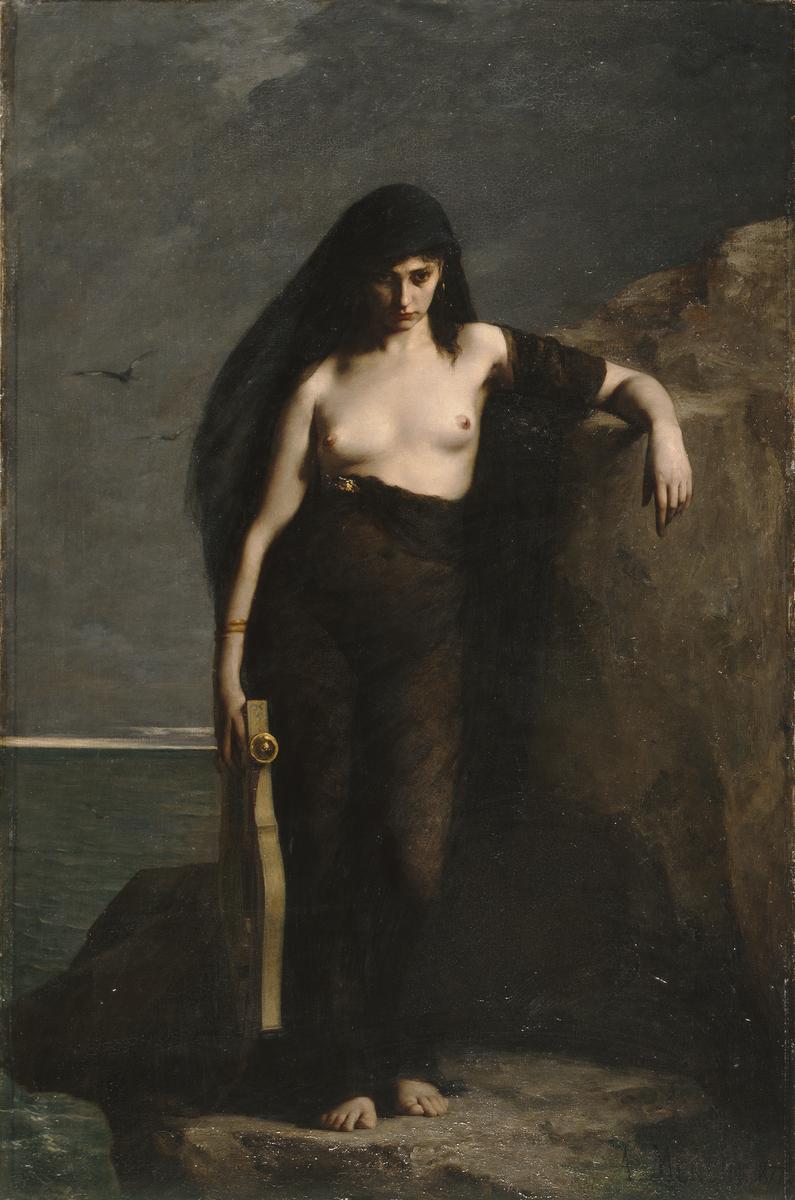
- 1877 Charles Mengin - Sappho.jpg — Charles Mengin · Public domain
- Anacreon monte calvo.jpg — ChrisO · CC BY-SA 3.0
- Mosaic Portrait of the Poet Alcman (cropped).jpg — ellenm1 · CC BY 2.0
- Solon demands to pledge respect for his laws.jpg — M. A. Barth · Public domain
- VIII.1.a, Pompeii. June 2017. Painted panel from west end of south wall of enthroned Pindar with lyre, with Muse and poetess.jpg — Ancient Roman frescos of Pompeii · Public domain
- Stesichorus.jpg — Pirizz at Italian Wikipedia · Public domain
- Tanagra, 5th century kylix a symposiast sings Theognis o paidon kalliste.png — Émile Gilliéron · Public domain
- Nuremberg chronicles f 60r 3.png — Michel Wolgemut, Wilhelm Pleydenwurff; Text: Hartmann Schedel · Public domain
- Heinrich Schwemminger - Die Kraniche des Ibykus - 3739 - Kunsthistorisches Museum.jpg — Heinrich Schwemminger · Public domain
- Hipponax of Ephesus.jpg — Published by Guillaume Rouille(1518?-1589) · Public domain
- P.Oxy. XI 1361 fr. 4.jpg — The Egypt Exploration Society · Public domain
- Moreau - Tyrtée, cat.96.jpg — Gustave Moreau · Public domain


Images are resized for display; some views use CSS cropping. Original files and pre-existing edits are documented at the source links.